Managing Common Pregnancy Discomforts Naturally
Cleveland Clinic
Nutritionist
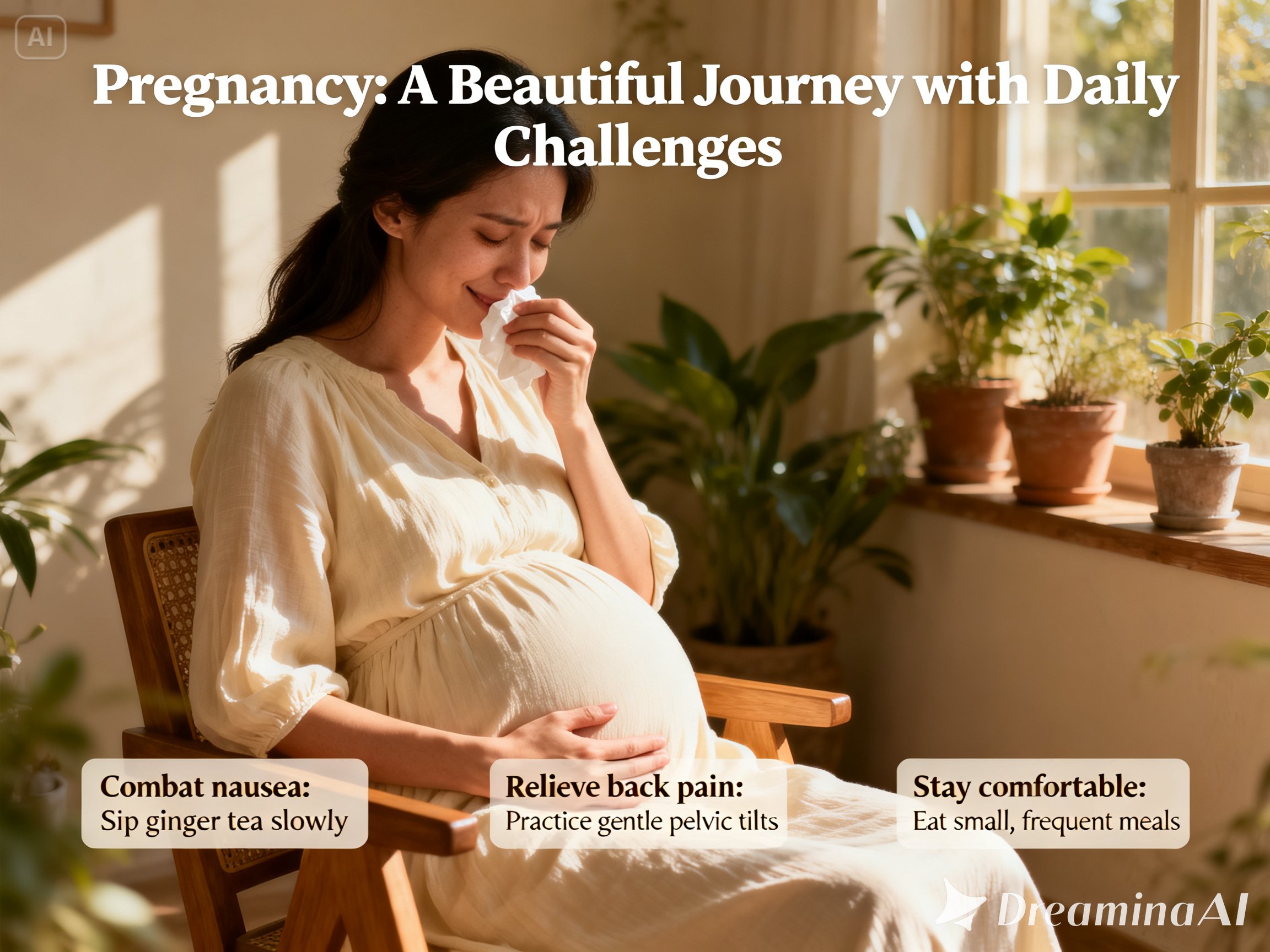
Pregnancy is a beautiful journey and also one that can bring daily challenges. From nausea to back pain, your body is working incredibly hard. Here's what you can do to feel better, naturally and safely.
Morning Sickness: It Can Strike Any Time
Despite the name, morning sickness nausea and sometimes vomiting can happen at any time of day or night. It affects up to 70% of pregnant women during the first trimester. Most women see symptoms improve significantly by week 13–14.
Practical Relief Strategies
- Eat small, frequent meals every 1–2 hours an empty stomach worsens nausea
- Before getting out of bed, eat a dry starch: crackers, toast, or dry cereal
- Stay in bed for 20 minutes after eating; rise slowly
- Avoid greasy, spicy, or strong-smelling foods
- Sip ginger tea, chew ginger candies, or add fresh ginger to meals
- Try acupressure wristbands (P6 point)
- Stay hydrated with small, frequent sips of water or herbal tea
- Ask your doctor about vitamin B6 (pyridoxine) or doxylamine
When to call your doctor: If you can't keep any food or liquid down, are losing weight, or feel extremely weak, you may have hyperemesis gravidarum a severe form requiring medical treatment.
Back Pain
As your belly grows, your posture shifts and your lower back, pelvis, and hips take on increasing strain.
- Prenatal yoga or gentle stretching cat-cow and child's pose relieve lumbar tension
- Use a pregnancy body pillow when sleeping
- Apply a warm compress to sore muscles for 15–20 minutes
- Seek a trained prenatal massage therapist
- Wear supportive footwear; avoid high heels
- Kegel exercises strengthen pelvic floor muscles
Heartburn & Acid Reflux
- Eat smaller meals; avoid eating 2–3 hours before bed
- Avoid spicy, acidic, or fried foods
- Chew sugar-free gum to stimulate saliva production
- Sleep with your upper body elevated on extra pillows
- Wear loose, comfortable clothing
Leg Swelling (Edema)
- Stay active with walking or swimming
- Elevate your feet when sitting or resting
- Wear compression stockings during the day
- Reduce sodium intake
- Stay well-hydrated drinking more water helps reduce water retention
Warning: Sudden, severe swelling especially in the face or hands combined with headache or visual changes may indicate preeclampsia. Contact your healthcare provider immediately.
Fatigue
- Rest whenever possible listen to your body
- Eat iron-rich foods to prevent anemia-related exhaustion
- Light physical activity (walking, swimming, prenatal yoga) can paradoxically increase energy
- Maintain a consistent sleep routine; use pillows for positioning comfort
Sources: Cleveland Clinic, Pregnancy Pains & Discomfort, updated Feb. 2026 | Stanford Medicine Children's Health | UCSF Health, Coping With Common Discomforts of Pregnancy | Rochester Regional Health, Sept. 2024